


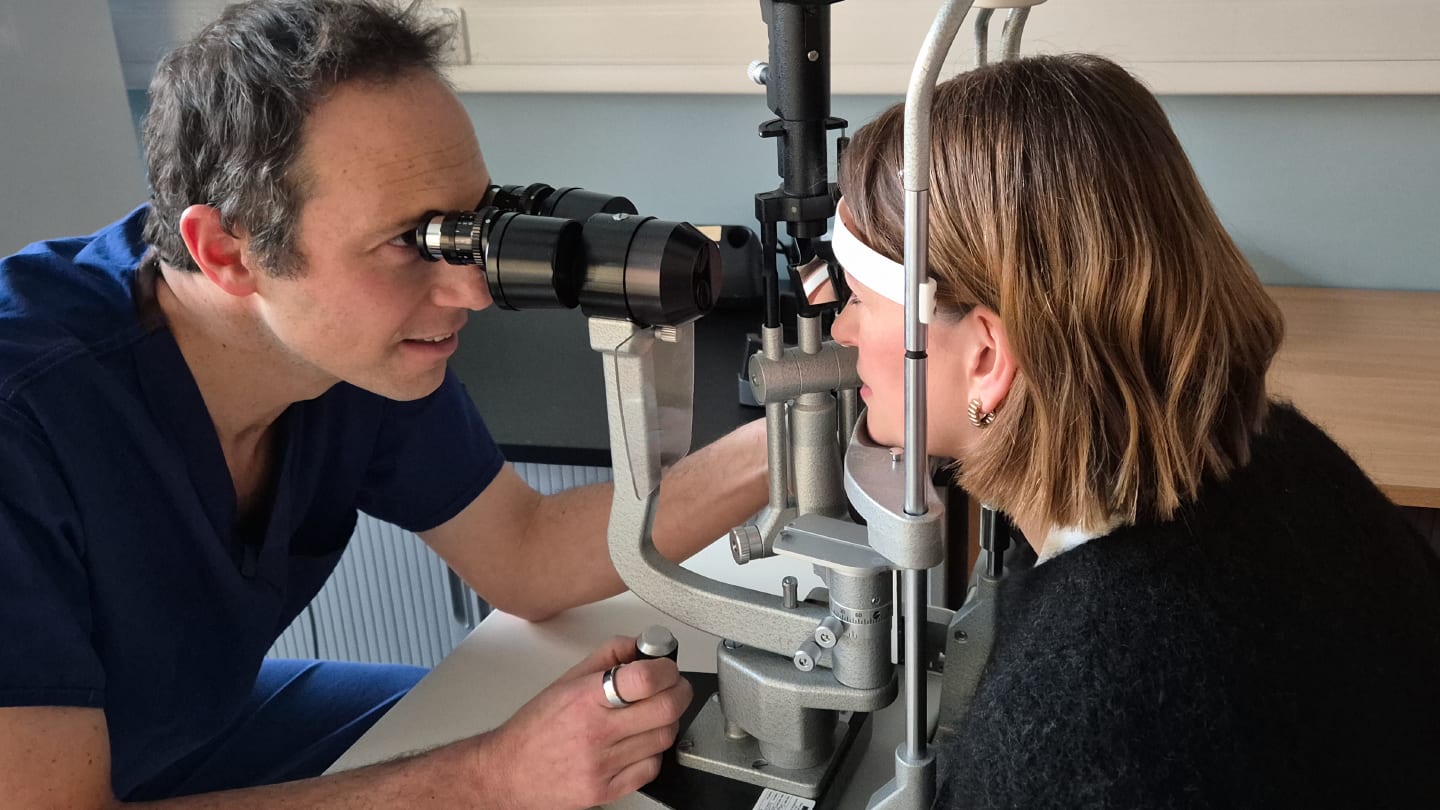
Hypotony: Diagnosis and management
From theory to practice
Chronic structural ocular hypotony is a rare but sight-threatening condition with limited treatment options and no established standard of care.
This brand new one-day workshop provides a comprehensive overview of chronic structural ocular hypotony and introduces a novel treatment protocol developed at Moorfields Eye Hospital. Based on the STRETCH protocol, the first prospective case series demonstrating improved visual acuity, intraocular pressure, and axial length following intravitreal viscoelastics injections in selected patients with chronic structural hypotony.
The morning sessions will consist of live lectures delivered face-to-face at Moorfields Eye Hospital and simultaneously streamed online. Topics will include:
- Pathophysiology and classification of ocular hypotony.
- Clinical phenotyping and multimodal imaging.
- Assessment of visual potential using flash VEP and full-field ERG.
- Inclusion and exclusion criteria for treatment.
- Premorbid axial length and treatment endpoints.
- Results and lessons from the STRETCH protocol.
The afternoon sessions will be delivered face-to-face only and will focus on:
- Practical aspects of intravitreal viscoelastics injections.
- Management of adverse events.
- Interactive case discussions.
- Review of imaging and treatment planning.
Faculty will include members of the Moorfields multidisciplinary Hypotony Service, with expertise in uveitis, glaucoma, ocular ultrasound, electrophysiology, and retina. The workshop will be highly interactive, with opportunities for participants to discuss real cases and ask questions throughout the day.
You can choose to attend online for the morning session only or in-person for the full day.
Due to the kind support of the Moorfields Biomedical Research Centre, a special rate is available for fellows wishing to attend (please see below).
Course aims
- Provide a structured approach to the assessment and management of chronic structural ocular hypotony.
- Disseminate the findings of the STRETCH protocol and the Moorfields Hypotony Service treatment protocol.
- Teach participants how to identify patients with visual potential who may benefit from treatment.
- Review the practical aspects of intravitreal viscoelastics injections, including treatment endpoints and complication management.
- Encourage multidisciplinary collaboration and stimulate future research in this challenging area.
Key learning outcomes
By the end of this workshop, participants will be able to:
- Distinguish between numerical and structural hypotony and recognise their clinical implications.
- Identify reversible causes of hypotony and understand when intervention is appropriate.
- Assess visual potential using electrophysiology.
- Apply the STRETCH protocol for patient selection, treatment planning, and monitoring.
- Recognise and manage complications associated with intravitreal HPMC injections.
You can hear more from the course lead by watching the short video below:
Who is this course for?
This workshop will benefit ophthalmologists from all over the world at all stages of their careers who are interested in the assessment and management of chronic ocular hypotony:
- Consultant ophthalmologists
- Specialty and Associate Specialist (SAS) doctors
- Clinical fellows
- Specialty trainees
Workshop date
Please note that the date of this workshop has been changed from the originally advertised date and it will now take place one week later, on 11 December.This course is kindly supported by:
Book Now
| Date | Location | Time | Seats | Price | |
| 11 December 2026, full day | Education Hub, 15 Ebenezer Street, London N1 7NH | £400.00 | |||
| 11 December 2026, full day, fellow registration | Education Hub, 15 Ebenezer Street, London N1 7NH | Fellow registration | £100.00 | ||
| 11 December 2026, morning | Online via MS Teams | £200.00 | |||
| 11 December 2026, morning, fellow registration | Online via MS Teams | Fellow registration | £50.00 |
Course fees
Taught by
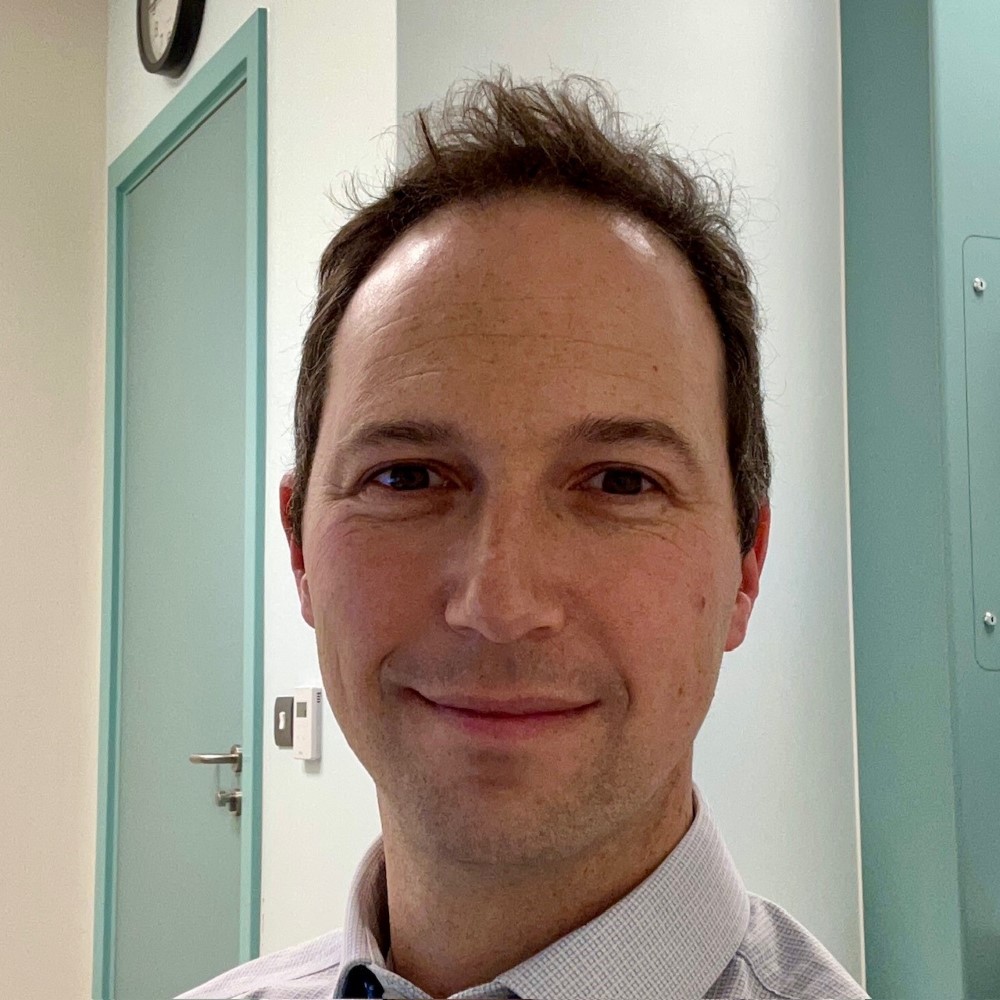
Harry Petrushkin
Mr Harry Petrushkin is a Consultant ophthalmologist at Moorfields and Great Ormond Street Hospital Specialising in the medical and surgical management of uveitis in adults and children. He studied medicine at Cambridge University and Kings College London. He carried out much of his ophthalmic training in Moorfields Eye Hospital, with Prof Carlos Pavesio and St Thomas’ Hospital with Prof Miles Stanford where he developed his interest in inflammatory eye disease. This led to a PhD, which he carried out at Queen Mary University London, in the Behcet’s Disease Centre of Excellence with Prof Farida Fortune, studying the immunogenetics of Behcet’s Disease. In 2016, Harry travelled to the United States, and spent time at the Francis Proctor Eye Institute, San Francisco, CA with Prof Nisha Acharya; the Casey Eye Institute, Portland, OR with Prof James Rosenbaum and the Massachusetts Eye Research and Surgery Institute, Boston, MA with Prof Steven Foster. Mr Petrushkin has a research interest in ocular tuberculosis, paediatric uveitis and chronic hypotony.
Antonio Calcagni
Antonio currently is a Consultant electrophysiologist at Moorfields Eye Hospital and holds an honorary position at University College London. He received his MD from The Catholic University of the Sacred Heart in Rome, defending the thesis “Iris Pigmentation and Normal Contrast Sensitivity”, and then went on to do his Ophthalmology training in the West Midlands and Oxford Deaneries in the UK. Antonio is a member of the British Society for Clinical Electrophysiology of Vision and of the Midland Ophthalmological Society. He has been involved in several research projects and has a special interest in visual electrophysiology, retinal imaging, and structure–function correlations in retinal and neuro-ophthalmological diseases.

Nick Stouthidis
Nick Strouthidis is a Consultant ophthalmologist in the glaucoma service at Moorfields and clinical professor of ophthalmology at Sydney University. He has a research interest in optic nerve imaging and has a clinical interest in the surgical management of complex secondary glaucomas.

James Gooch
James Gooch is Head ultrasonographer at Moorfields Eye Hospital NHS Foundation Trust, with extensive expertise in diagnostic ocular ultrasonography, including B-scan imaging and ultrasound biomicroscopy (UBM). His clinical and research interests include the application of ultrasound in complex vitreoretinal disease, ocular oncology and ocular hypotony. He is a co-author of the STRETCH protocol and has contributed to research on the role of ultrasound in the assessment and management of hypotony, including ciliary body and anterior segment evaluation using UBM.

Elizabeth Yang
Miss Elizabeth Yang is a Consultant vitreoretinal surgeon at Moorfields Eye Hospital NHS Foundation Trust. She specialises in the assessment and surgical management of vitreoretinal disease, including retinal detachment and complex vitreoretinal conditions. She is actively involved in clinical research, service development and ophthalmic education, with publications spanning vitreoretinal surgery, complex intraocular surgery and innovative models of retinal care.

Mark Wilkins
Mr Mark Wilkins is a Consultant ophthalmic surgeon at Moorfields Eye Hospital NHS Foundation Trust and former Head of the Corneal Service. He has been a consultant at Moorfields since 2006 and specialises in complex corneal disease, corneal transplantation, cataract surgery and refractive surgery, with particular expertise in Boston Keratoprosthesis (KPro) surgery. He is also an Honorary Senior Lecturer at the UCL Institute of Ophthalmology and has an extensive research portfolio, including leadership of major clinical trials in ophthalmic surgery.